
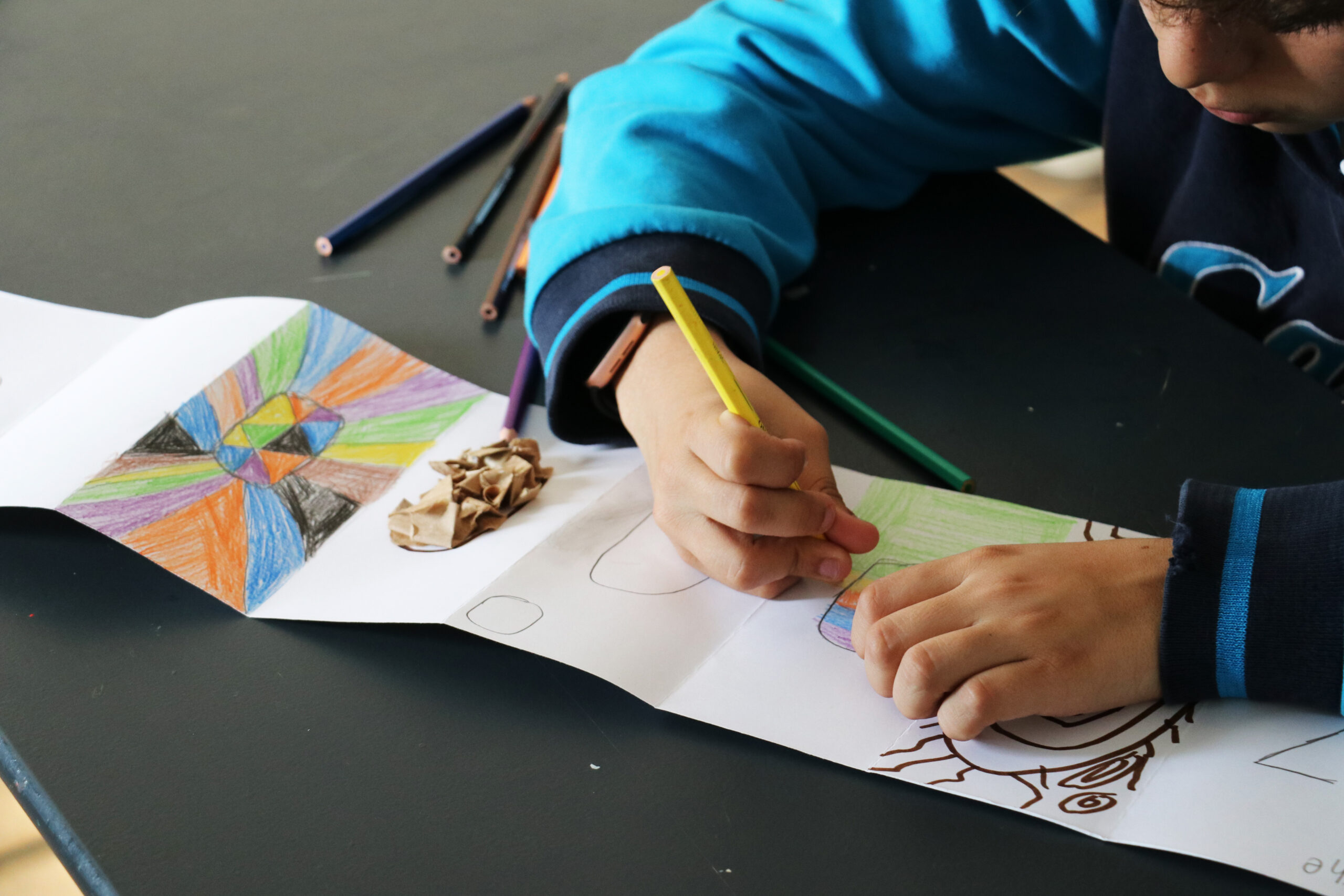
Hearing that a student is gifted often conjures up the image of a brilliant mind for mathematics or scientific memorization. However, creativity plays a fundamental role in this process.
The bias of the perfect School Records
In the past, giftedness was often identified based largely on academic performance. Many children with extraordinary potential went unnoticed by schools for reasons such as confusing academic aptitude with general cognitive ability or failing to take the student’s background into account.
A lack of tailored stimulation and rigid standardization often lead to boredom or chronic demotivation. A gifted student is not one who simply stores more information. It is the guidance departments that play a key role in identifying students’ strengths, in addition to the resources and tools available to families to encourage their development.
Creativity as an Enigma in Giftedness
The idea that creativity is a fundamental aspect of intelligence is gaining increasing support. This is evident in the PISA 2024 report, which measured creative thinking skills for the first time among 15-year-old students. One of the findings is that students who are TOP in creative thinking are not necessarily the top students in the class in subjects such as mathematics.
To this end, a control group and an experimental group were established using a very large sample size. Both groups underwent two different tests, with a period of time elapsing between them. During that interval, the members of the experimental group engaged in creativity training with their teachers, while those in the control group did not. The results showed a clear improvement in the group that received this training.
This type of intelligence is considered one of the key skills of the 21st century, along with communication and critical thinking, according to experts at ACI. Creative thinking trains the brain’s plasticity, which means that the mind adapts quickly to new problems and expands overall cognitive abilities.
How to approach the identification of creativity
At Casvi International American School in Tres Cantos, the school’s guidance department assesses students’ profiles from both a purely cognitive perspective and a creative one. Through a psychometric test, different areas of talent are identified, ensuring that each student receives the enrichment plan their mind requires.
On our campus, you’ll findmultipurpose spaces dedicated to art, design, and music, designed as experimental labs where students enjoy creative freedom. For example, we have enrichment classrooms for PYP and MYP students, where they learn to be more independent and build their motivation by working on creative projects based on their interests. In addition, students in Grade 12 (G12) and the Diploma Programme (DP2) who are taking advanced arts courses cap off their academic journey by organizing their own art exhibitions open to the school community.