
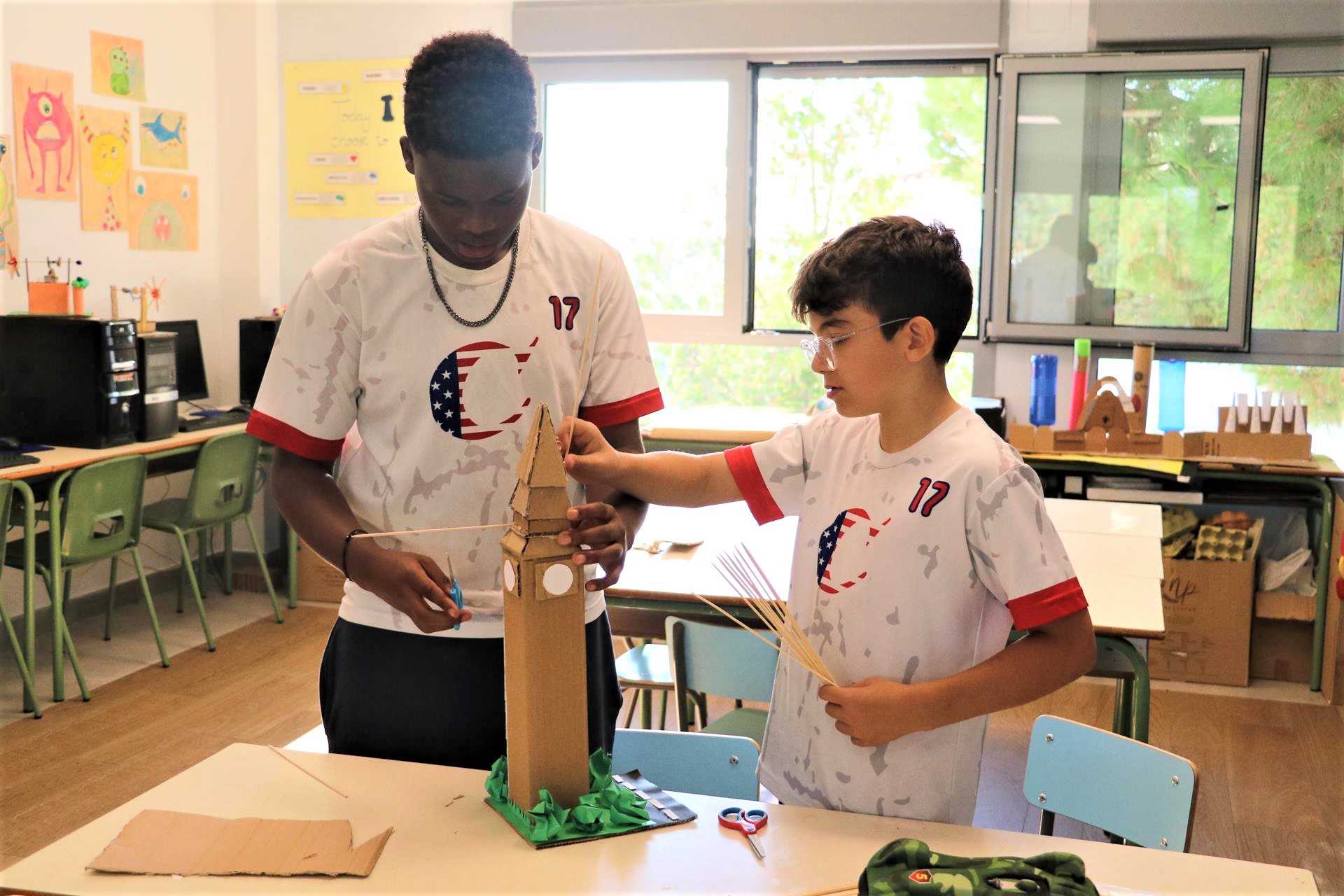
Recent research confirms that stimulating the senses promotes attention and motivation and improves comprehension and memory.
Do children learn better when their senses are stimulated?
In an educational landscape where students are increasingly exposed to digital stimuli, schools should promote a learning environment in which touching, experimenting, and observing are key to understanding the subject matter.
Some students lose focus when learning is limited to listening and memorization. Neuroeducation confirms that sensory stimulation is an essential driver of learning.
Currently, with the rise of screens in almost every aspect of daily life, there is also a lower retention rate among children. This reason would add to the list of reasons for incorporating tactile or hands-on experiences in the classroom, demonstrating that physical interaction promotes memory consolidation.
The study Beyond Play (conducted by Frontiers in Education – 2024) correlates the lack of sensory variety with a decrease in sustained attention. Multisensory environments allow students to connect abstract concepts with concrete experiences, facilitating their understanding.
Sensory stimulation: a direct link to deep learning
The brain is capable of integrating multiple senses to create stronger neural networks and more connected learning. With sensory stimulation, educational content is understood as a whole rather than as separate entities.
The study by Frontiers in Education (“Beyond Play” – 2024) cited above demonstrated that environments that increase interest and engagement in children aged 3 to 6 are multisensory. This is particularly evident when combined stimuli are present, compared to traditional activities that rely on a single sensory channel.
The student becomes the “protagonist” of their own learning: they can choose the best way to engage with a subject. With educational models like the American one, which are not so focused on memorization, it is evident that students develop critical thinking skills from an early age. At Casvi International American School, which follows the American educational model, teachers incorporate multisensory activities into their daily lessons across all subjects. Science fairs, presentations of projects chosen and carried out entirely by the students, and multicultural celebrations help them connect concepts across various subjects.
How to Connect the Senses with Academic Subjects at Casvi
At Casvi Tres Cantos, sensory stimulation is an integral part of the international educational approach.
In the MYP (Middle Years Programme), there are projects involving physical expression and design that draw on creativity across various subjects. At the end of this stage, students must complete a personal project of their own choosing, in which they apply their knowledge and connect the different subjects. In the DP (Diploma Programme) or high school, activities continue to integrate theoretical knowledge with sensory experiences such as visual arts, music, or sports.
The International Baccalaureate approach is combined with the American model, allowing each student to learn through experience, connect ideas to real-life situations, and develop stronger skills.
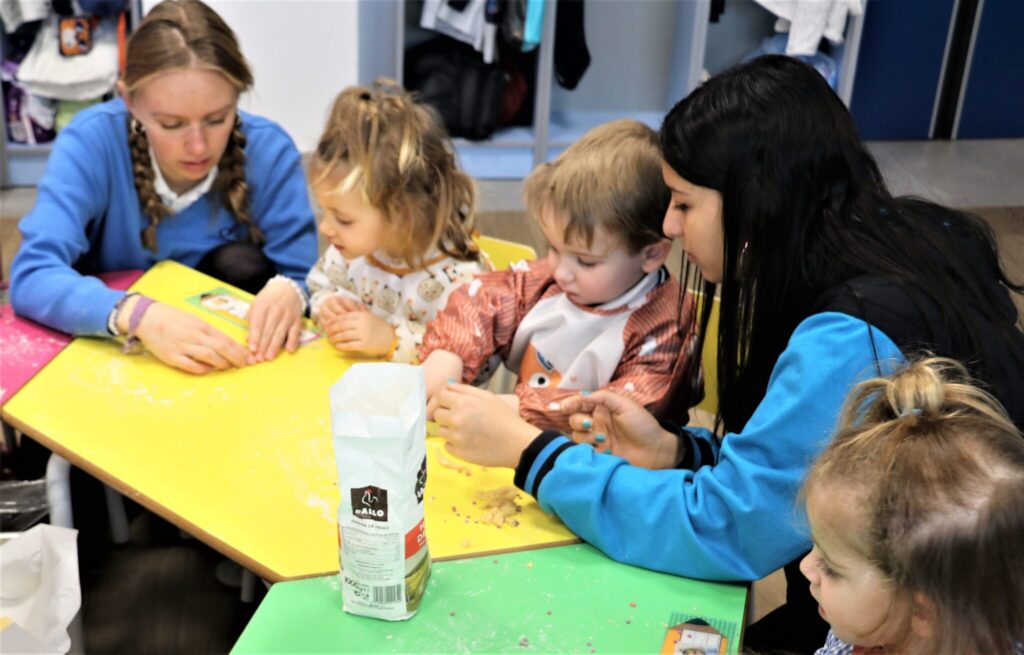
The senses are present in all stages
In the PYP (Primary Years Programme), classrooms and activities are designed to incorporate touch, movement, and spatial awareness.
Frequently Asked Questions
Why does sensory stimulation improve learning?
What are the benefits of using hands-on or manipulative activities in the classroom?
They promote information retention, boost motivation, and help students connect abstract concepts with real-world experiences—a key factor according to neuroeducation.
How do international schools implement this sensory stimulation?
At Casvi International American School, this approach is applied through hands-on activities such as a6> such as fairs for personal projects, cultural celebrations, art and experiences that encompass various fields of knowledge.
Starting at what age is it recommended to work on sensory stimulation?
From the earliest stages of education. In programs such as PYP, MYP and DP incorporate sensory activities adapted to each age group and subject.