
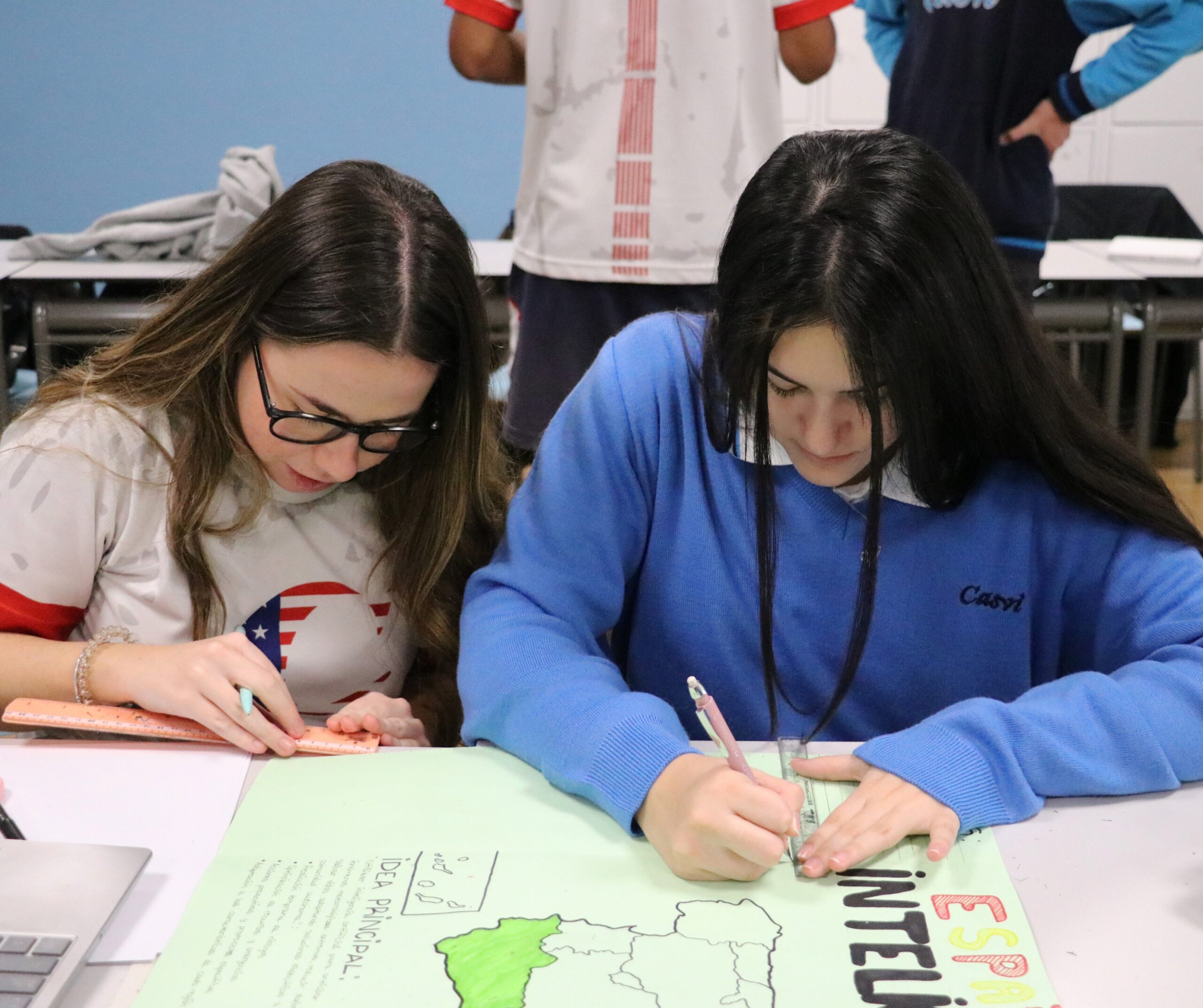
Collaborative learning in the classroom is a pedagogical methodology based on positive interdependence, in which students work together to achieve a common academic goal. This model transforms the role of the student from a passive recipient to an active participant, requiring them to communicate ideas, negotiate solutions, and apply critical thinking to solve challenges that exceed individual capacity.
What is collaborative learning and why is it gaining prominence in the classroom
This educational methodology involves students working together to achieve a common goal. Unlike “group work,” where each student may focus on an individual task, here each student takes on more active responsibilities that require them to discuss, negotiate, and work together to find a solution.
Individual progress depends on the progress of the team. According to UNESCO, participatory methodologies and cooperative learning help to develop key skills such as communication, creativity, and problem-solving of complex problems.
The educational challenge: memorization vs. group participation
Many students advance to higher grades with strong academic performance, but they struggle with teamwork, resolving disagreements, or expressing their opinions in a reasoned manner. In addition, increased screen time and the digitization of social interactions have reduced opportunities for face-to-face interaction among children and adolescents.
A report by the OECD highlights that the educational environments that promote active participation and cooperative learning tend to generate higher levels of motivation and engagement on the part of the students.
The absence of cooperative dynamics in the classroom can affect emotional well-being and the way in which students interact. When all the pressure falls on individual performance, some students develop fear of making mistakes, excessive competitiveness or insecurity about participating in public.
Benefits of Collaborative Learning in the Classroom
One of the main benefits of collaborative learning in the classroom is the development of critical thinking. Working with others requires students to justify their ideas, analyze different points of view, and construct solid arguments.
In addition, collaborative dynamics tend to increase the participation and motivation of students. Many activities present practical challenges, research, or projects in real life that make it so that students get involved more actively in learning. In some schools, for example, the students work together on projects related to sustainability, presentations shared, or scientific projects developed as a team.
How we landed at Casvi
In some educational models, students also participate in self-assessment and group reflection. The goal is not merely to earn a grade, but to learn how to improve collaboration and communication.
Experts point out, however, that this methodology requires planning and teacher guidance. Simply seating several students together is not enough to ensure genuine collaborative learning. At Casvi International American School, we incorporate active and collaborative methodologies to foster a more participatory learning experience. A concrete example of this approach is the Model United Nations (MUN) project, where our students of different ages collaborate to defend diplomatic positions. Here, cooperative learning allows each student to discover their strengths.
If you want your child to develop the social and academic skills that require the best institutions in the world, collaborative learning is the way.
Frequently Asked Questions
What is the difference between collaborative and cooperative learning?
Although the terms are often used interchangeably, cooperative learning typically involves more structured arrangements and defined roles, whereas collaborative learning places greater emphasis on the joint construction of knowledge.
Does collaborative learning improve grades?
It cannot be said with certainty that it improves grades per se. The goal is to foster a deeper understanding of the material and increase student engagement, beyond just grades.
Can it be applied at all stages of education?
Yes. There are tailored programs available from preschool through high school and college.
What role does the teacher play in this methodology?
The teacher organizes the activities, guides student participation, and ensures that all students contribute in a balanced and meaningful way.