
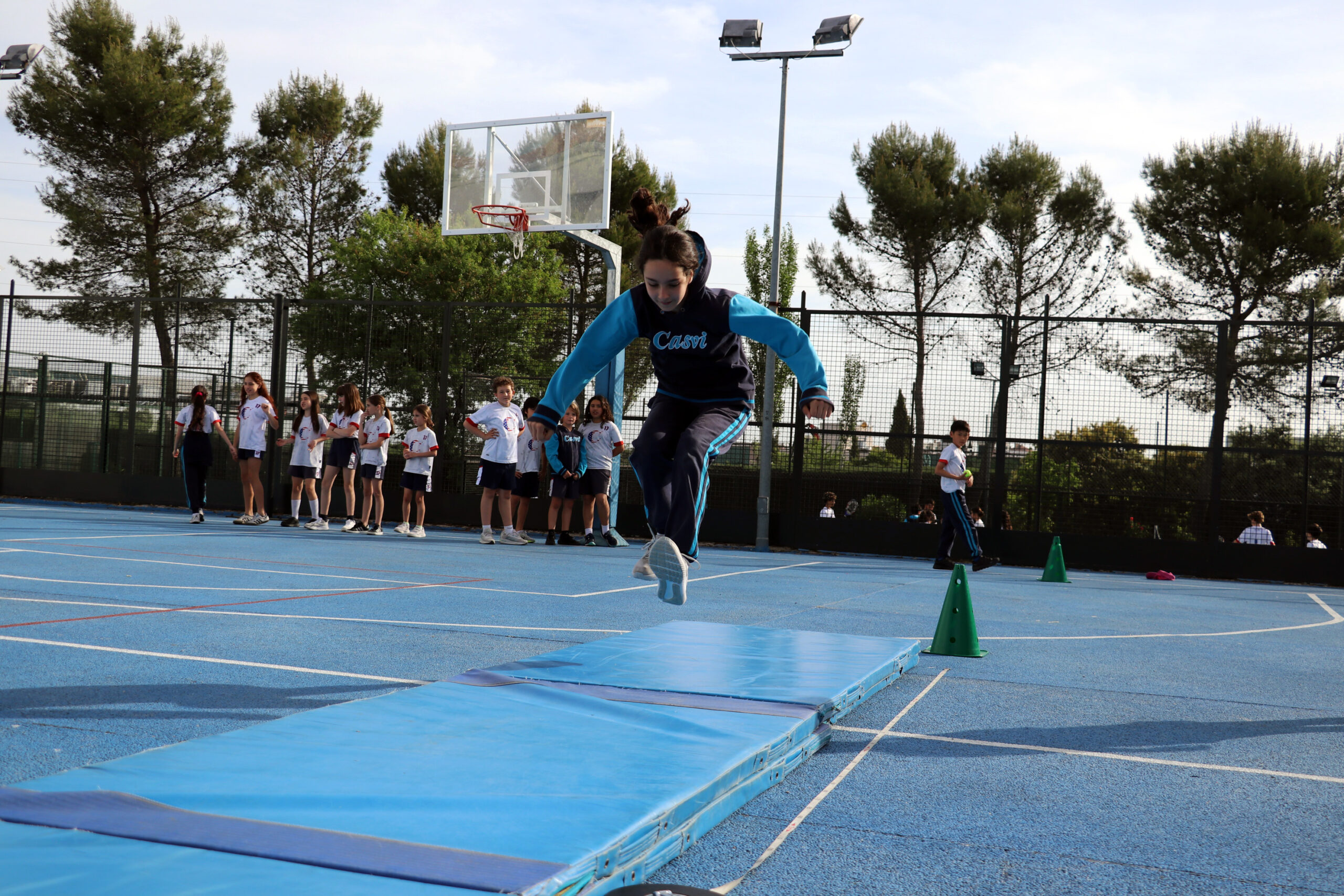
Practicing sports is one of the fundamental pillars of growth: it helps with coordination, mental and physical health, improves teamwork, and builds coordination, among other benefits. However, to this practice, one must add teaching of sportsmanship. The minors need to carry the values of exercise into their daily lives. Fair play encompasses following the rules and the attitude toward success and failure.
Benefits of sports in psychological development
On a cognitive and emotional level, exercise in children acts as a social laboratory where they experience situations of conflict, overcoming, and cooperation. These are values of sports that can be conveyed in a way that is healthy and safe, while they enjoy themselves.
Practicing sportsmanship helps develop resilience, foster empathy, and improve self-control. Children will be able to learn that defeat is an opportunity for learning and not a personal failure. In the same way, they will recognize the effort of the opponent and understand the value of teamwork, but also manage frustration in the face of decisions made by third parties or when making mistakes under pressure.
Strategies for teaching sportsmanship
For sports at school to be truly educational, we must take into account that the children look to their role models as a reference to view them as examples of how to behave. For that reason, be careful if you are encouraging behaviors that are far from being appropriate, such as yelling at another team or putting pressure on the students. The approach rewards the effort rather than the result.
- The reinforcement of the process: instead of merely praising the victory, it is essential to highlight the persistence or a good play.
- Managing both victory and defeat: both can be normalized in both scenarios. A good athlete maintains humility in winning and dignity when losing.
- Respect for the rules: compliance with the regulations promotes ethics.
Exercise is one of the driving forces behind a good education. Following these guidelines, the students will be able to get to know themselves in more areas and in different situations.
Sports as a unit for research at Casvi
At Casvi International American School, sports are an integral part of our educational model. We ensure that every student receives physical training that builds on their individual strengths while also fostering teamwork. A prime example of this is the Casvi Soccer Academy.
Sportsmanship in children is fostered every day at our Tres Cantos campus, as well as at the Casvi Villaviciosa and Casvi Boadilla schools, where it is an integral pillar of our educational philosophy. Within the framework of the IB and the American model, our students compete, research, and reflect on the social impact of sports, integrating an international mindset and multicultural respect into every practice and tournament. The ultimate goal is to develop athletes and citizens of integrity who are capable of leading with values.
Frequently Asked Questions
What should I do if my son can't stand losing and gets upset during sports?
This is a common reaction linked to frustration tolerance. It is essential not to punish the emotion, but rather to acknowledge it and then redirect it. Teaching children that mistakes are part of the learning process is vital. Encouraging post-game reflection helps children identify which skills they can improve, shifting the focus from the result to personal growth.
What are the main values that sports convey to school-age children?
Sports at school are one of the main ways for developing discipline, commitment, self-improvement, and teamwork. These values are cross-cutting; a student who learns to respect a turn to speak in the classroom of inquiry will learn to respect the decisions of a referee on the field
Why is it important to promote the values of sports from an early age?
Because sports serve as a microcosm of real life. By promoting the values of sports, we are preparing children to collaborate in multicultural settings and resolve conflicts peacefully.
How does the behavior of parents affect children's sportsmanship?
Modeling is the most powerful educational tool. Children imitate the behavior of their role models. If adults remain calm and show respect from the stands, children will come to understand that sportsmanship is the norm. Support should be unconditional—based on effort, never contingent on athletic success.
What is the difference between healthy competitiveness and a lack of sportsmanship?
Healthy competition is when a child strives to reach their full potential and push past their own limits, using their opponent as motivation to improve. In contrast, a lack of sportsmanship arises when the desire to win overrides respect for others or for the rules.